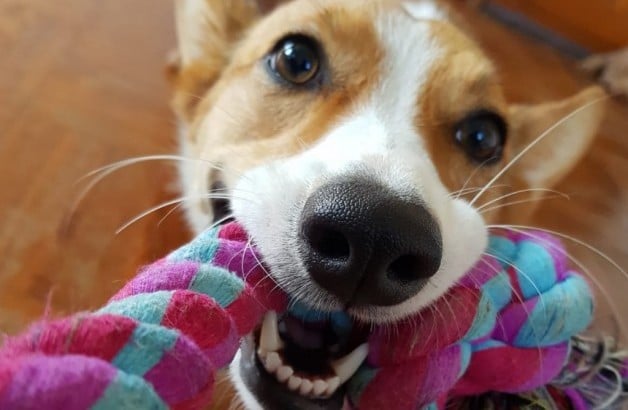

Transporting a pet to Singapore is a complex process that demands significant time and preparation. It can be overwhelming for pet owners to navigate the requirements and regulations involved in the process. That's why our team of experts is here to provide comprehensive guidance, support, and coordination of your pet's entire move.
Need Our Support?
In This Guide
TLDR: As of April 1, 2026, Singapore requires an AVS-recognised pet agent to handle clearance at CAPQ, DIY clearance is no longer permitted. Your dog or cat needs an ISO-compliant microchip, one current rabies vaccination (primary or up-to-date booster), and a titer blood draw at least 28 days after that vaccination. USDA digital VEHCS endorsement is accepted for the health certificate. Most personal pet moves from the US complete a 10-day quarantine at home. Several dog breeds are banned outright, and others require a licence, insurance, and a banker's guarantee.
Singapore's pet import process changed in a real way this year, and this page reflects the current rules, not the DIY process that used to apply. Here's exactly what your dog or cat needs.
The Agent Mandate: What Changed April 1, 2026
Since April 1, 2026, pet owners can no longer handle their own CAPQ clearance in Singapore. Every dog and cat arriving on or after this date must have an AVS-recognised pet agent appointed to manage clearance at the Changi Animal and Plant Quarantine Station. There are no exceptions.
This doesn't change the underlying import requirements below, it adds one non-negotiable layer on top: a qualified, AVS-recognised agent must be in place before your pet arrives. Confirm any agent's recognition status directly through AVS eServices or the AVS feedback form before appointing them.
Microchip
Your pet needs an ISO-compliant microchip. The microchip number must appear on every vaccination record, serology report, and health certificate, and must be verified within 7 days before export.
Minimum Age
Your pet must be at least 12 weeks (84 days) old at the time of export.
Residency Requirement
Your pet must have resided continuously in a Schedule I or II country for at least 6 months before export, or since birth. This is separate from the short-trip quarantine exemption below.
Rabies Vaccination
Your pet needs a current rabies vaccination, either a primary dose or an up-to-date booster. The vaccine must be inactivated or recombinant. Singapore does not accept RNA or live vaccines.
Rabies Titer Test (RNATT)
The blood draw for your pet's titer test must happen at least 28 days after the rabies vaccination, and the draw itself must fall at least 90 days and no more than 12 months before your export date. The test must be conducted at a WOAH reference laboratory, or a lab in a Schedule I or II country approved by that country's competent authority.
Core Vaccinations
Dogs need Canine Distemper virus, Canine Adenovirus type 1, and Canine Parvovirus type 2 (the DHPP vaccine). Cats need Feline Calicivirus, Feline Herpesvirus-1, and Feline Panleukopenia (the FVRCP vaccine). Your pet's records need to show the microchip number, vaccination date, vaccine brand and batch number, and your vet's signature.
Health Certificate
USDA digital VEHCS endorsement is accepted for your pet's health certificate. Your coordinator will confirm the exact certificate format required for your specific move.
US pets from Singapore's Schedule II classification also need a Captain's Declaration: your pet must be loaded in the export country in a tamper-proof, sealed cage, with no contact with other animals during transport. If a seal breaks in transit, the cage must be re-sealed.
Import Licence: PALS Before GoBusiness
For dogs, apply for a dog licence through PALS first, then apply for the import licence through GoBusiness. For cats, apply for the import licence directly through GoBusiness; no separate cat licence is required. The licence is valid for 90 days once issued.
Customs GST Permit
A Customs In-Payment (GST) permit is required before your pet arrives. Engage a forwarding agent from the Singapore Customs approved list to handle this.
The Final 2 to 7 Day Window
Your pet's final veterinary exam, external parasite treatment, and internal parasite treatment must all happen between 2 and 7 days before export, not earlier, not later. Sections I through III of the health certificate are completed at this visit; Section IV requires USDA endorsement.
CAPQ Clearance and Booking
Book your pet's inspection appointment at CAPQ at least 5 working days before arrival through AVS eServices. Arriving without a confirmed appointment results in a penalty fee. Your pet must arrive at least 3 hours before CAPQ closing time, or your pet may be held overnight. CAPQ operating hours are subject to change, confirm current hours directly with AVS before travel.
Crate Requirements
Soft carriers are not accepted for transfer to CAPQ. All pets must travel in IATA-compliant rigid hard crates. Crates larger than 82cm (L) x 64cm (H) x 58cm (W) cannot be transported by the government service; owners or agents must arrange personal collection at CAPQ or use a private contractor.
Quarantine
Most personal pet moves from the US complete a 10-day quarantine at home rather than at a facility, using a smart collar tag system.
You may qualify for a short-trip exemption from home quarantine if you've owned your pet for 6 months or more and you're arriving within 5 days of your pet, with veterinary records and an e-ticket to confirm both conditions. This exemption is separate from the residency requirement above.
The Animal Quarantine Centre (AQC) facility applies to commercial imports, not personal pet moves. Government licensing, quarantine, and clearance fees apply throughout this process, and your coordinator will confirm current rates for your specific case.
Breed Restrictions
The following dog breeds and their crosses are banned from import: Pit Bull types (including the American Pit Bull Terrier, American Staffordshire Terrier, Staffordshire Bull Terrier, and American Bulldog), Akita, Boerboel, Dogo Argentino, Fila Brasileiro, Neapolitan Mastiff, Tosa, and Perro de Presa Canario.
Bengal and Savannah cats are banned unless documented as 5th-generation or further from ancestral stock, with proof of lineage required.
Mixed or cross-breed dogs need a colour photo of the face and body submitted with the import licence application.
The following breeds are restricted rather than banned, and require a dog licence with additional conditions: Bull Terrier, Doberman Pinscher, Rottweiler, German Shepherd (including Belgian Shepherd and East European Shepherd), and Mastiffs including the Bull Mastiff, Cane Corso, and Dogue De Bordeaux.
Restricted-breed dogs must be leashed and muzzled in public, complete obedience training, and their owner must carry liability insurance and post a banker's guarantee. A maximum of 3 dogs is allowed per private residence, with only 1 restricted-breed dog per household.
Housing Eligibility
HDB flats allow a maximum of 1 dog and up to 2 cats. Non-HDB residential premises allow up to 3 dogs and/or cats combined, with only 1 restricted-breed dog permitted.
How PetRelocation Can Help
Singapore's process has real complexity even before the April 2026 agent mandate, and that mandate now makes professional coordination a legal requirement, not just a convenience. PetRelocation has coordinated Singapore moves for over 20 years and works with AVS-recognised agents to keep every step compliant with current rules.
Complete Support covers full coordination of your pet's vaccination schedule, titer testing, licence applications, health certificate, and AVS-recognised agent coordination. Vet Paperwork Support focuses on the health certificate and vaccination documentation while you manage the rest. Consultation gives you direct access to a coordinator to confirm your pet's timeline and which quarantine path applies to your situation.
Get a free quote from PetRelocation and a relocation manager will walk you through your options.